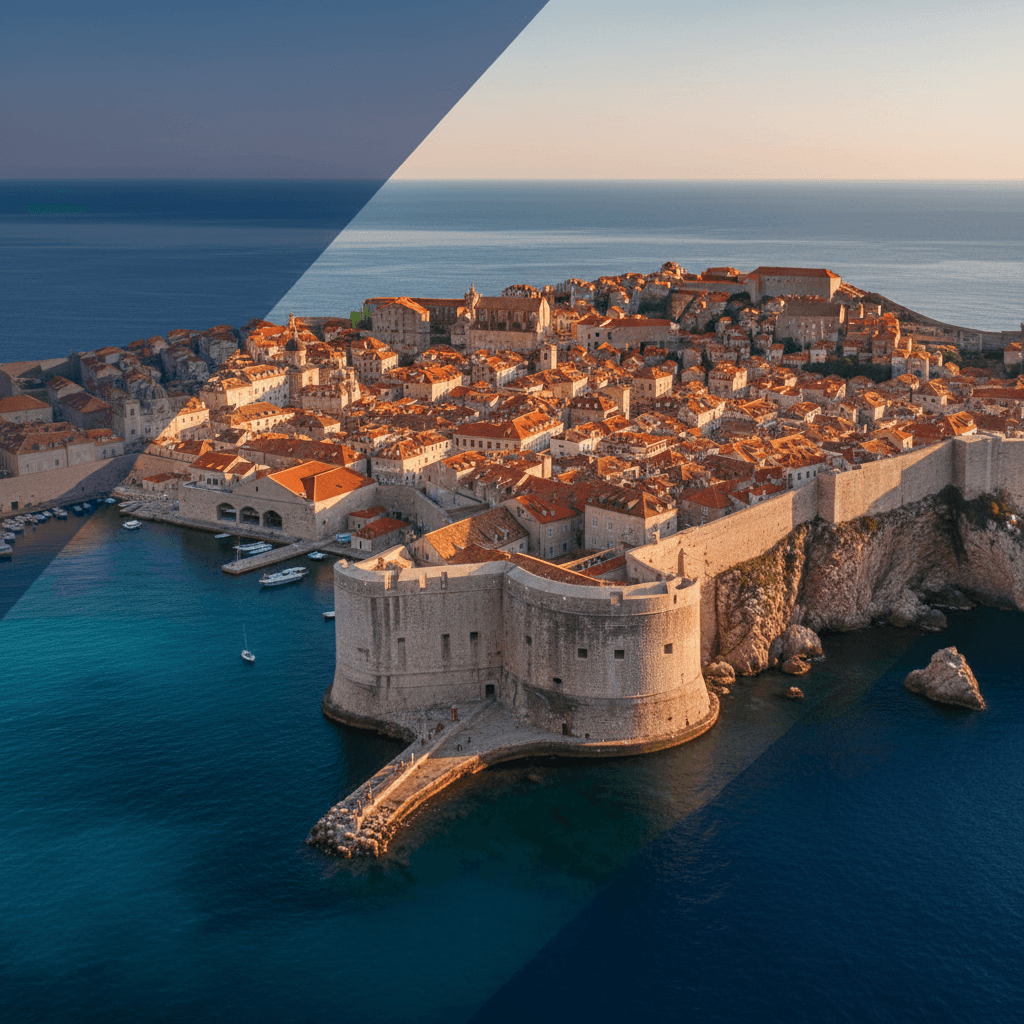
Croatia Schengen Visa from Morocco 2026: Requirements & Appointment Guide
Croatia is one of the Schengen Area's newest members, and Moroccan travellers are starting to notice. The Dalmatian coast, Dubrovnik's medieval walls, Plitvice Lakes, and Split's palace district compete with any Mediterranean destination, often at lower prices than France, Spain, or Italy. Since Croatia fully joined the Schengen zone on 1 January 2023, your Croatian Schengen visa opens the door to all 29 member states.
The challenge, as with most Schengen applications from Morocco, is not assembling documents or paying fees. It is securing an appointment. VFS Global handles Croatian visa applications in Morocco, and slots evaporate the moment they appear. This guide covers everything Moroccan applicants need to know to apply for a Croatia Schengen visa in 2026, documents, fees, centres, processing times, and how to deal with the appointment problem head-on.
If refreshing the booking page is not realistic, Visard watches it for you and tells you when Croatia visa appointment slots from Morocco open.
Who Needs a Croatia Schengen Visa from Morocco?
All Moroccan passport holders require a Schengen visa to enter Croatia, regardless of travel purpose, tourism, business, family visits, cultural events, or medical treatment.
Croatia became a full Schengen member on 1 January 2023. A Schengen visa issued by Croatia allows travel across all 29 Schengen member states for up to 90 days within any 180-day period.
If Croatia is your main destination (where you spend the most nights), the Croatian consular authority is the correct one. If your time is equally split between multiple Schengen countries, apply to the country of first entry.
Required Documents for a Croatia Visa from Morocco
The Croatian consular section, via VFS Global, requires the following for a short-stay (Type C) Schengen visa. Every missing item risks your file being returned incomplete.
Passport
Valid for at least 3 months beyond your planned departure from the Schengen Area
Issued within the last 10 years
At least 2 blank pages
Photocopies of previous Schengen visas from the last 3 years
Visa Application Form
Completed, printed, and signed
Available on the VFS Global Croatia/Morocco portal
Photograph
One recent passport-size colour photo (35mm x 45mm)
White background, full face visible
Taken within the last 6 months, meeting ICAO standards
Travel Medical Insurance
Minimum coverage of EUR 30,000
Must cover emergency medical assistance, hospitalisation, and repatriation
Valid across all Schengen states
Coverage should include a buffer of several days before and after your trip dates
Flight Itinerary
Round-trip reservation showing entry and exit from the Schengen Area
A reservation is sufficient, confirmed tickets are not required at application stage
Accommodation Proof
Hotel booking confirmation with your name, dates, and full address
If staying with a host: invitation letter from the Croatian resident, plus their proof of residence and ID
Financial Means
Bank statements from the last 3 to 6 months
Stable balance reflecting ability to cover your stay (guideline: EUR 70–100 per day)
Salary certificate or attestation de travail
Self-employed: registre de commerce and recent financial statements
Employment or Status Proof
Employed: Attestation de travail plus a leave authorisation letter stating position, salary, and approved absence dates
Self-employed: Trade licence and tax declarations
Student: Enrolment certificate plus parental guarantee letter
Retired: Pension documentation
Cover Letter
Explain your travel purpose, planned itinerary, and dates
Include your Moroccan address and contact details
Civil Status Documents
Acte de naissance, livret de famille, or marriage certificate
Documents proving ties to Morocco
All documents in Arabic must be translated into French, English, or Croatian by a certified translator.
Visa Fees
Consular Fees
Applicant | Fee |
|---|---|
Adults (12+) | EUR 90 |
Children 6–11 | EUR 45 |
Children under 6 | Free |
Current fee: EUR 90 for adults and EUR 45 for children aged 6–11. This EU-wide fee has applied since 11 June 2024.
Fee Exemptions
Croatia may waive visa fees for certain categories including school pupils, students, and researchers on educational or academic trips, as well as representatives of non-profit organisations aged 25 or under attending seminars or conferences.
VFS Global Service Fee
Approximately 300 MAD per application, inclusive of VAT
Paid in cash in Moroccan Dirhams at the centre
Non-refundable
Total cost example: An adult applying through VFS Global pays roughly EUR 90 + 300 MAD, approximately 1,150 MAD total.
Processing Time
Standard processing: 15 calendar days
Extended processing: Up to 45 calendar days for complex cases
Peak season (June–September): Plan for longer processing
You can submit your application up to 6 months before your travel date. Apply at least 6 weeks in advance, and earlier during summer months when Croatia is among the most popular Mediterranean destinations.
VFS Global Centres in Morocco
Croatia visa applications are handled through VFS Global:
Rabat
VFS Global Visa Application Centre
Rue Al Koufa (next to Bab Rwah), Rabat
Opening hours: Monday to Friday, 9:00–17:00
Submission hours: Monday to Friday, 9:00–14:00
Passport retrieval: Monday to Friday, 11:00–16:30
Casablanca
VFS Global Visa Application Centre
Casablanca, Morocco
Both centres provide biometric capture, document submission, and passport return services. All applications are forwarded to the Croatian consular authority for a decision.
The Real Problem: Getting an Appointment
Croatia's Schengen visa from Morocco follows the familiar pattern: the documents are clear, the fees are standard, and processing is reasonable. None of that helps if you cannot book an appointment.
VFS Global releases appointment slots periodically and without advance notice. Croatia, now fully part of the Schengen system, shares the same bottleneck that plagues every other Schengen country in Morocco. Slots disappear within seconds. Some applicants report refreshing the booking page daily for weeks before finding an opening, particularly during the summer travel season when Dubrovnik and Split top the destination lists.
Intermediaries have built a market around this scarcity, charging 2,000 to 5,000 MAD per person just for appointment booking, separate from any visa preparation help.
Visard visa appointment monitoring provides a practical alternative. The system checks VFS Global's booking portal for Croatia appointments continuously throughout the day. When a slot opens at VFS Casablanca or Rabat, you receive an instant notification via Telegram.
A Schengen visa appointment bot for Morocco residents covers your entire family on a single subscription, no personal visa data required. Compared to paying intermediary fees or losing weeks to manual refreshing, it is the most efficient way to get your appointment booked.
Step-by-Step: How to Apply
1. Prepare your documents
Use the checklist above. Croatia requires travel medical insurance covering a minimum of EUR 30,000. Ensure all Arabic documents are translated into French, English, or Croatian. If a Croatian host is inviting you, their invitation letter should include their proof of residence and a copy of their ID.
2. Book a VFS Global appointment
This is the bottleneck. Use the VFS Global online portal or a Croatia visa appointment bot in Morocco to get notified the moment a slot opens.
3. Attend your appointment
Bring originals and photocopies. Biometrics (10 fingerprints and photo) are collected at VFS if you have not provided them within the last 59 months. Pay all fees in MAD at the centre.
4. Track your application
VFS provides a tracking reference. Monitor status online. The consular authority may contact you for additional documents or an interview.
5. Collect your passport
Pick up from VFS or arrange courier delivery. Verify all details on the visa sticker, dates, number of entries, and permitted stay duration.
Tips for a Stronger Application
Demonstrate strong ties to Morocco. Property ownership, stable employment, family obligations, and previous travel history with on-time returns all signal that you intend to come back.
Financial documentation matters. Avoid large, unexplained deposits just before applying. A steady 3-to-6-month pattern of income and expenses is more convincing than a suddenly inflated balance.
Be specific about your Croatian itinerary. Croatia is a relatively new Schengen member. A detailed cover letter with a day-by-day itinerary showing genuine interest in the country, not just a transit stop, strengthens your case.
Plan around peak season. Croatia's Adriatic coast sees massive tourist demand from June through September. Applications surge during these months. Apply early, and use a monitoring tool to catch appointment slots as they appear.
Apply early and plan ahead. For a complete Schengen visa guide from Morocco, see our detailed walkthrough covering timelines, common mistakes, and country-specific tips.
Croatia as a Schengen Destination
Croatia joined the Schengen Area on 1 January 2023. With a Croatian Schengen visa, you can:
Stay up to 90 days within any 180-day period
Travel freely across all 29 Schengen member states
Enter and exit through any Schengen country
Dubrovnik's walled old town is one of the most photographed cities in the Mediterranean. Split houses the remains of Diocletian's Palace. Plitvice Lakes National Park offers turquoise waterfalls set among forested hills. Zagreb, the capital, blends Austro-Hungarian architecture with a growing café and gallery scene. And the Dalmatian islands, Hvar, Brač, Korčula, are increasingly popular with travellers seeking an alternative to the crowded beaches of southern France and Spain.
Croatia's central Adriatic position also makes it a natural hub for multi-country trips. Ferries connect to Italy, and overland routes reach Slovenia, Hungary, and Bosnia, making it particularly appealing for Moroccan travellers planning to combine several European destinations on a single Schengen visa.
Frequently Asked Questions
Can I apply at VFS Casablanca if I live in another city?
Yes. You can submit your application at either VFS centre regardless of your city of residence in Morocco.
Croatia only joined Schengen in 2023, is a Croatian visa really valid for all Schengen states?
Yes. Since 1 January 2023, Croatia is a full Schengen member. A Schengen visa issued by Croatia is valid for all 29 member states, with the same rights as a visa issued by France, Germany, or any other Schengen country.
Do I need to book flights before applying?
No. A flight reservation showing your intended dates is sufficient. You can book confirmed tickets after receiving your visa.
How long is a Croatian Schengen visa valid?
Typically issued for the duration of your trip. Multiple-entry visas with longer validity may be issued based on your travel history and the consular authority's assessment.
Can I travel to other Schengen countries with a Croatian visa?
Yes. A Schengen visa issued by Croatia is valid for all Schengen member states. However, Croatia should be your main destination or first point of entry.
What currency should I carry in Croatia?
Croatia adopted the euro (EUR) on 1 January 2023, the same date it joined Schengen. Cards are widely accepted, but carrying some cash for smaller establishments is advisable.
Sources:
Croatia Schengen Visa from Morocco 2026: Requirements & Appointment Guide
Croatia is one of the Schengen Area's newest members, and Moroccan travellers are starting to notice. The Dalmatian coast, Dubrovnik's medieval walls, Plitvice Lakes, and Split's palace district compete with any Mediterranean destination, often at lower prices than France, Spain, or Italy. Since Croatia fully joined the Schengen zone on 1 January 2023, your Croatian Schengen visa opens the door to all 29 member states.
The challenge, as with most Schengen applications from Morocco, is not assembling documents or paying fees. It is securing an appointment. VFS Global handles Croatian visa applications in Morocco, and slots evaporate the moment they appear. This guide covers everything Moroccan applicants need to know to apply for a Croatia Schengen visa in 2026, documents, fees, centres, processing times, and how to deal with the appointment problem head-on.
If refreshing the booking page is not realistic, Visard watches it for you and tells you when Croatia visa appointment slots from Morocco open.
Who Needs a Croatia Schengen Visa from Morocco?
All Moroccan passport holders require a Schengen visa to enter Croatia, regardless of travel purpose, tourism, business, family visits, cultural events, or medical treatment.
Croatia became a full Schengen member on 1 January 2023. A Schengen visa issued by Croatia allows travel across all 29 Schengen member states for up to 90 days within any 180-day period.
If Croatia is your main destination (where you spend the most nights), the Croatian consular authority is the correct one. If your time is equally split between multiple Schengen countries, apply to the country of first entry.
Required Documents for a Croatia Visa from Morocco
The Croatian consular section, via VFS Global, requires the following for a short-stay (Type C) Schengen visa. Every missing item risks your file being returned incomplete.
Passport
Valid for at least 3 months beyond your planned departure from the Schengen Area
Issued within the last 10 years
At least 2 blank pages
Photocopies of previous Schengen visas from the last 3 years
Visa Application Form
Completed, printed, and signed
Available on the VFS Global Croatia/Morocco portal
Photograph
One recent passport-size colour photo (35mm x 45mm)
White background, full face visible
Taken within the last 6 months, meeting ICAO standards
Travel Medical Insurance
Minimum coverage of EUR 30,000
Must cover emergency medical assistance, hospitalisation, and repatriation
Valid across all Schengen states
Coverage should include a buffer of several days before and after your trip dates
Flight Itinerary
Round-trip reservation showing entry and exit from the Schengen Area
A reservation is sufficient, confirmed tickets are not required at application stage
Accommodation Proof
Hotel booking confirmation with your name, dates, and full address
If staying with a host: invitation letter from the Croatian resident, plus their proof of residence and ID
Financial Means
Bank statements from the last 3 to 6 months
Stable balance reflecting ability to cover your stay (guideline: EUR 70–100 per day)
Salary certificate or attestation de travail
Self-employed: registre de commerce and recent financial statements
Employment or Status Proof
Employed: Attestation de travail plus a leave authorisation letter stating position, salary, and approved absence dates
Self-employed: Trade licence and tax declarations
Student: Enrolment certificate plus parental guarantee letter
Retired: Pension documentation
Cover Letter
Explain your travel purpose, planned itinerary, and dates
Include your Moroccan address and contact details
Civil Status Documents
Acte de naissance, livret de famille, or marriage certificate
Documents proving ties to Morocco
All documents in Arabic must be translated into French, English, or Croatian by a certified translator.
Visa Fees
Consular Fees
Applicant | Fee |
|---|---|
Adults (12+) | EUR 90 |
Children 6–11 | EUR 45 |
Children under 6 | Free |
Current fee: EUR 90 for adults and EUR 45 for children aged 6–11. This EU-wide fee has applied since 11 June 2024.
Fee Exemptions
Croatia may waive visa fees for certain categories including school pupils, students, and researchers on educational or academic trips, as well as representatives of non-profit organisations aged 25 or under attending seminars or conferences.
VFS Global Service Fee
Approximately 300 MAD per application, inclusive of VAT
Paid in cash in Moroccan Dirhams at the centre
Non-refundable
Total cost example: An adult applying through VFS Global pays roughly EUR 90 + 300 MAD, approximately 1,150 MAD total.
Processing Time
Standard processing: 15 calendar days
Extended processing: Up to 45 calendar days for complex cases
Peak season (June–September): Plan for longer processing
You can submit your application up to 6 months before your travel date. Apply at least 6 weeks in advance, and earlier during summer months when Croatia is among the most popular Mediterranean destinations.
VFS Global Centres in Morocco
Croatia visa applications are handled through VFS Global:
Rabat
VFS Global Visa Application Centre
Rue Al Koufa (next to Bab Rwah), Rabat
Opening hours: Monday to Friday, 9:00–17:00
Submission hours: Monday to Friday, 9:00–14:00
Passport retrieval: Monday to Friday, 11:00–16:30
Casablanca
VFS Global Visa Application Centre
Casablanca, Morocco
Both centres provide biometric capture, document submission, and passport return services. All applications are forwarded to the Croatian consular authority for a decision.
The Real Problem: Getting an Appointment
Croatia's Schengen visa from Morocco follows the familiar pattern: the documents are clear, the fees are standard, and processing is reasonable. None of that helps if you cannot book an appointment.
VFS Global releases appointment slots periodically and without advance notice. Croatia, now fully part of the Schengen system, shares the same bottleneck that plagues every other Schengen country in Morocco. Slots disappear within seconds. Some applicants report refreshing the booking page daily for weeks before finding an opening, particularly during the summer travel season when Dubrovnik and Split top the destination lists.
Intermediaries have built a market around this scarcity, charging 2,000 to 5,000 MAD per person just for appointment booking, separate from any visa preparation help.
Visard visa appointment monitoring provides a practical alternative. The system checks VFS Global's booking portal for Croatia appointments continuously throughout the day. When a slot opens at VFS Casablanca or Rabat, you receive an instant notification via Telegram.
A Schengen visa appointment bot for Morocco residents covers your entire family on a single subscription, no personal visa data required. Compared to paying intermediary fees or losing weeks to manual refreshing, it is the most efficient way to get your appointment booked.
Step-by-Step: How to Apply
1. Prepare your documents
Use the checklist above. Croatia requires travel medical insurance covering a minimum of EUR 30,000. Ensure all Arabic documents are translated into French, English, or Croatian. If a Croatian host is inviting you, their invitation letter should include their proof of residence and a copy of their ID.
2. Book a VFS Global appointment
This is the bottleneck. Use the VFS Global online portal or a Croatia visa appointment bot in Morocco to get notified the moment a slot opens.
3. Attend your appointment
Bring originals and photocopies. Biometrics (10 fingerprints and photo) are collected at VFS if you have not provided them within the last 59 months. Pay all fees in MAD at the centre.
4. Track your application
VFS provides a tracking reference. Monitor status online. The consular authority may contact you for additional documents or an interview.
5. Collect your passport
Pick up from VFS or arrange courier delivery. Verify all details on the visa sticker, dates, number of entries, and permitted stay duration.
Tips for a Stronger Application
Demonstrate strong ties to Morocco. Property ownership, stable employment, family obligations, and previous travel history with on-time returns all signal that you intend to come back.
Financial documentation matters. Avoid large, unexplained deposits just before applying. A steady 3-to-6-month pattern of income and expenses is more convincing than a suddenly inflated balance.
Be specific about your Croatian itinerary. Croatia is a relatively new Schengen member. A detailed cover letter with a day-by-day itinerary showing genuine interest in the country, not just a transit stop, strengthens your case.
Plan around peak season. Croatia's Adriatic coast sees massive tourist demand from June through September. Applications surge during these months. Apply early, and use a monitoring tool to catch appointment slots as they appear.
Apply early and plan ahead. For a complete Schengen visa guide from Morocco, see our detailed walkthrough covering timelines, common mistakes, and country-specific tips.
Croatia as a Schengen Destination
Croatia joined the Schengen Area on 1 January 2023. With a Croatian Schengen visa, you can:
Stay up to 90 days within any 180-day period
Travel freely across all 29 Schengen member states
Enter and exit through any Schengen country
Dubrovnik's walled old town is one of the most photographed cities in the Mediterranean. Split houses the remains of Diocletian's Palace. Plitvice Lakes National Park offers turquoise waterfalls set among forested hills. Zagreb, the capital, blends Austro-Hungarian architecture with a growing café and gallery scene. And the Dalmatian islands, Hvar, Brač, Korčula, are increasingly popular with travellers seeking an alternative to the crowded beaches of southern France and Spain.
Croatia's central Adriatic position also makes it a natural hub for multi-country trips. Ferries connect to Italy, and overland routes reach Slovenia, Hungary, and Bosnia, making it particularly appealing for Moroccan travellers planning to combine several European destinations on a single Schengen visa.
Frequently Asked Questions
Can I apply at VFS Casablanca if I live in another city?
Yes. You can submit your application at either VFS centre regardless of your city of residence in Morocco.
Croatia only joined Schengen in 2023, is a Croatian visa really valid for all Schengen states?
Yes. Since 1 January 2023, Croatia is a full Schengen member. A Schengen visa issued by Croatia is valid for all 29 member states, with the same rights as a visa issued by France, Germany, or any other Schengen country.
Do I need to book flights before applying?
No. A flight reservation showing your intended dates is sufficient. You can book confirmed tickets after receiving your visa.
How long is a Croatian Schengen visa valid?
Typically issued for the duration of your trip. Multiple-entry visas with longer validity may be issued based on your travel history and the consular authority's assessment.
Can I travel to other Schengen countries with a Croatian visa?
Yes. A Schengen visa issued by Croatia is valid for all Schengen member states. However, Croatia should be your main destination or first point of entry.
What currency should I carry in Croatia?
Croatia adopted the euro (EUR) on 1 January 2023, the same date it joined Schengen. Cards are widely accepted, but carrying some cash for smaller establishments is advisable.
Sources:
Related posts

Switzerland Visa Requirements from Morocco

Sweden Visa Requirements from Morocco 2026

Norway Visa Requirements from Morocco 2026
Malta Visa Documents from Morocco 2026
Italy Visa Guide from Morocco 2026

Iceland Visa Requirements from Morocco 2026

Finland Visa Requirements from Morocco 2026
Denmark Schengen Visa from Morocco in 2026
Croatia Visa Requirements from Morocco 2026
Austria Schengen Visa from Morocco: 2026 Guide
Related posts
Related posts